Table Of Content
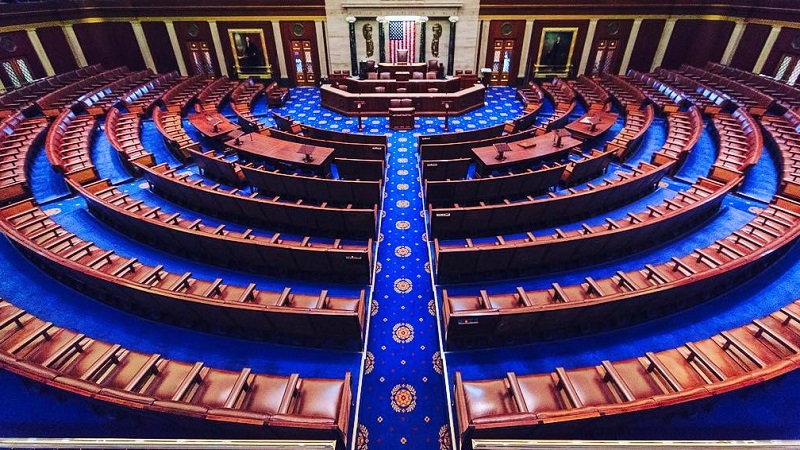
Generally, the debate procedures of the Committee of the Whole are more flexible than those of the House itself. One advantage of the Committee of the Whole is its ability to include otherwise non-voting members of Congress. The chaplain leads the House in prayer at the opening of the day. The sergeant at arms is the House's chief law enforcement officer and maintains order and security on House premises. Finally, routine police work is handled by the United States Capitol Police, which is supervised by the Capitol Police Board, a body to which the sergeant at arms belongs, and chairs in even-numbered years.
Age and Sex of Representatives
After the whips, the next ranking official in the House party's leadership is the party conference chair (styled as the Republican conference chair and Democratic caucus chair). Representatives and delegates serve for two-year terms, while a resident commissioner (a kind of delegate) serves for four years. The U.S. Constitution requires that vacancies in the House be filled with a special election. The term of the replacement member expires on the date that the original member's would have expired. The legislation includes $60 billion for Kyiv; $26 billion for Israel and humanitarian aid for civilians in conflict zones, including Gaza; and $8 billion for the Indo-Pacific region.
Sign up for Inside History
Congress first convened in the newly independent country’s then-capital of New York City, heralding the birth of the two bodies that form the legislative branch of government—the House of Representatives and the Senate. Information about travel-related expenses incurred by representatives who are reimbursed by non-government sources. Information about certain expenditures for all official foreign travel by representatives and staff. Elected by their peers, certain representatives hold positions that combine institutional, administrative and partisan roles. The House has 435 members, the number representing each state is determined by population. Ballotpedia features 486,932 encyclopedic articles written and curated by our professional staff of editors, writers, and researchers.
Find Your Representative and Senators
Representative Jeff Myers - Missouri House of Representatives
Representative Jeff Myers.
Posted: Wed, 14 Feb 2024 21:47:25 GMT [source]
No member may make a speech or a motion unless they have first been recognized by the presiding officer. Moreover, the presiding officer may rule on a "point of order" (a member's objection that a rule has been breached); the decision is subject to appeal to the whole House. Representatives are usually identified in the media and other sources by party and state, and sometimes by congressional district, or a major city or community within their district. For example, Democratic representative Nancy Pelosi, who represents California's 11th congressional district within San Francisco, may be identified as "D–California", "D–California–11" or "D–San Francisco". Los Angeles Unified School District (LAUSD) is the 2nd largest public school district in the United States. During the 2016–2017 school year, LAUSD served around 734,641 students, including 107,142 students at independent charter schools and 69,867 adult students.During the same school year, it had 26,556 teachers and 33,635 other employees.
The party with a majority of seats in the House is known as the majority party. The speaker, committee chairs, and some other officials are generally from the majority party; they have counterparts (for instance, the "ranking members" of committees) in the minority party. Historically, many territories have sent non-voting delegates to the House. While their role has fluctuated over the years, today they have many of the same privileges as voting members, have a voice in committees, and can introduce bills on the floor, but cannot vote on the ultimate passage of bills.
Presently, the District of Columbia and the five inhabited U.S. territories each elect a delegate. A seventh delegate, representing the Cherokee Nation, has been formally proposed but has not yet been seated.[30] An eighth delegate, representing the Choctaw Nation is guaranteed by treaty but has not yet been proposed. Additionally, some territories may choose to also elect shadow representatives, though these are not official members of the House and are separate individuals from their official delegates. The states of Washington and California use a similar (though not identical) system to that used by Louisiana.
The Constitution vests certain exclusive powers in the House of Representatives, including the right to initiate impeachment proceedings and to originate revenue bills. The organization and character of the House of Representatives have evolved under the influence of political parties, which provide a means of controlling proceedings and mobilizing the necessary majorities. Party leaders, such as the speaker of the House and the majority and minority leaders, play a central role in the operations of the institution. From 1910 to 1975 committee and subcommittee chairmanship was determined purely by seniority; members of Congress sometimes had to wait 30 years to get one, but their chairship was independent of party leadership.
USA TODAY is exploring the questions you and others ask every day. From "How much does the president make?" to "How many amendments are there?" to "What is an oligarchy?" – we're striving to find answers to the most common questions you ask every day. Head to our Just Curious section to see what else we can answer. Each state gets a different number of representatives based on the total population.
In some cases, the commissions are entities of the House or Congress itself; in other cases, they are crafted as independent entities within the legislative branch. After extensive debate, the framers of the Constitution agreed to create the House with representation based on population and the Senate with equal representation. This agreement was part of what is referred to as The Great Compromise. If they do, the bill does not become law unless each House, by a two-thirds vote, votes to override the veto. [T]he constitutional prerogative of the House has been held to apply to all the general appropriations bills, and the Senate's right to amend these has been allowed the widest possible scope. Power is nowhere concentrated; it is rather deliberately and of set policy scattered amongst many small chiefs.
This has been a federal statutory requirement since 1967 pursuant to the act titled An Act For the relief of Doctor Ricardo Vallejo Samala and to provide for congressional redistricting.[18] Before that law, general ticket representation was used by some states. Under the Articles of Confederation, the Congress of the Confederation was a unicameral body with equal representation for each state, any of which could veto most actions. As a check to the power of the Speaker and Majority Leader, the Minority Leader, selected from the membership of the political party with fewer seats in the House, serves as an advocate for their party’s concerns and procedural rights. Because the number of representatives in each state’s delegation is based on population, larger states such as New York and California elect more representatives to the House, each to two-year terms.
The number rose following the ratification of the Constitution by North Carolina and Rhode Island in 1790; the first Congress (1789–91) adjourned with 65 representatives. Two additional representatives were added temporarily after the admission of Alaska and Hawaii as states in 1959, but at the next legislative apportionment, membership returned to 435, the number authorized by a law enacted in 1941. The House of Representatives shares equal responsibility for lawmaking with the U.S. As conceived by the framers of the Constitution, the House was to represent the popular will, and its members were to be directly elected by the people. In contrast, members of the Senate were appointed by the states until the ratification of the Seventeenth Amendment (1913), which mandated the direct election of senators.
The North was much more populous than the South, and therefore dominated the House of Representatives. However, the North held no such advantage in the Senate, where the equal representation of states prevailed. A majority of our budget comes from our members’ monthly donations. In 2024, our goal is to raise 70% of our budget from dues-paying members. Your gift allows us to respond rapidly to emerging issues, to take on powerful interests, and spend as little time possible on fundraising so we can focus on the crucial work that needs to get done every day.
After the conference chair, there are differences between each party's subsequent leadership ranks. After the Democratic caucus chair is the campaign committee chair (Democratic Congressional Campaign Committee), then the co-chairs of the Steering Committee. For the Republicans it is the chair of the House Republican Policy Committee, followed by the campaign committee chairman (styled as the National Republican Congressional Committee). States entitled to more than one representative are divided into single-member districts.
The system is fairly straight forward and can be used to identify most member and committee offices merely by knowing the correct room number regardless of building. Representatives use the prefix "The Honorable" before their names. A member of the House is referred to as a representative, congressman, or congresswoman.

"The thing that really caused the apportionment to get hung up over and over again throughout the 1920s was the insistence of a set of leaders that the House of Representatives could no longer grow any larger," Bouk says. "They said it's about efficiency. They didn't want to pay for more office space, to pay for more Congress people and more clerks. They believed the House couldn't be a deliberative body if it grew any larger." Congress has created a wide variety of temporary and permanent commissions to serve as advisory bodies for investigative or policy-related issues, or to carry out administrative, interparliamentary, or commemorative tasks. Such commissions are typically created by either law or House resolution, and may be composed of House members, private citizens, or a mix of both.
The Constitution does not specify the duties and powers of the speaker, which are instead regulated by the rules and customs of the House. Speakers have a role both as a leader of the House and the leader of their party (which need not be the majority party; theoretically, a member of the minority party could be elected as speaker with the support of a fraction of members of the majority party). Under the Presidential Succession Act (1947), the speaker is second in the line of presidential succession after the vice president. In most states, major party candidates for each district are nominated in partisan primary elections, typically held in spring to late summer.




No comments:
Post a Comment